From March 24 to 27, the Boao Forum for Asia (BFA) Annual Conference 2026 was held in Boao, Hainan Province. On March 26, Zhao Leji, Chairman of the Standing Committee of the National People’s Congress, attended the plenary session and delivered a keynote speech titled “Staying the Course and Jointly Creating a Better Future.”
20260327-1
More than 1,600 representatives from over 60 countries and regions participated in the conference, including political leaders, business executives, think tank experts, and media representatives. Notable attendees included Lawrence Wong, Prime Minister of Singapore; Sahiba Gafarova, Speaker of the National Assembly of Azerbaijan; Jagath Wickramaratne, Speaker of the Parliament of Sri Lanka; Roman Sklyar, First Deputy Prime Minister of Kazakhstan; and Ban Ki-moon, Chairman of the Board of Directors of BFA.
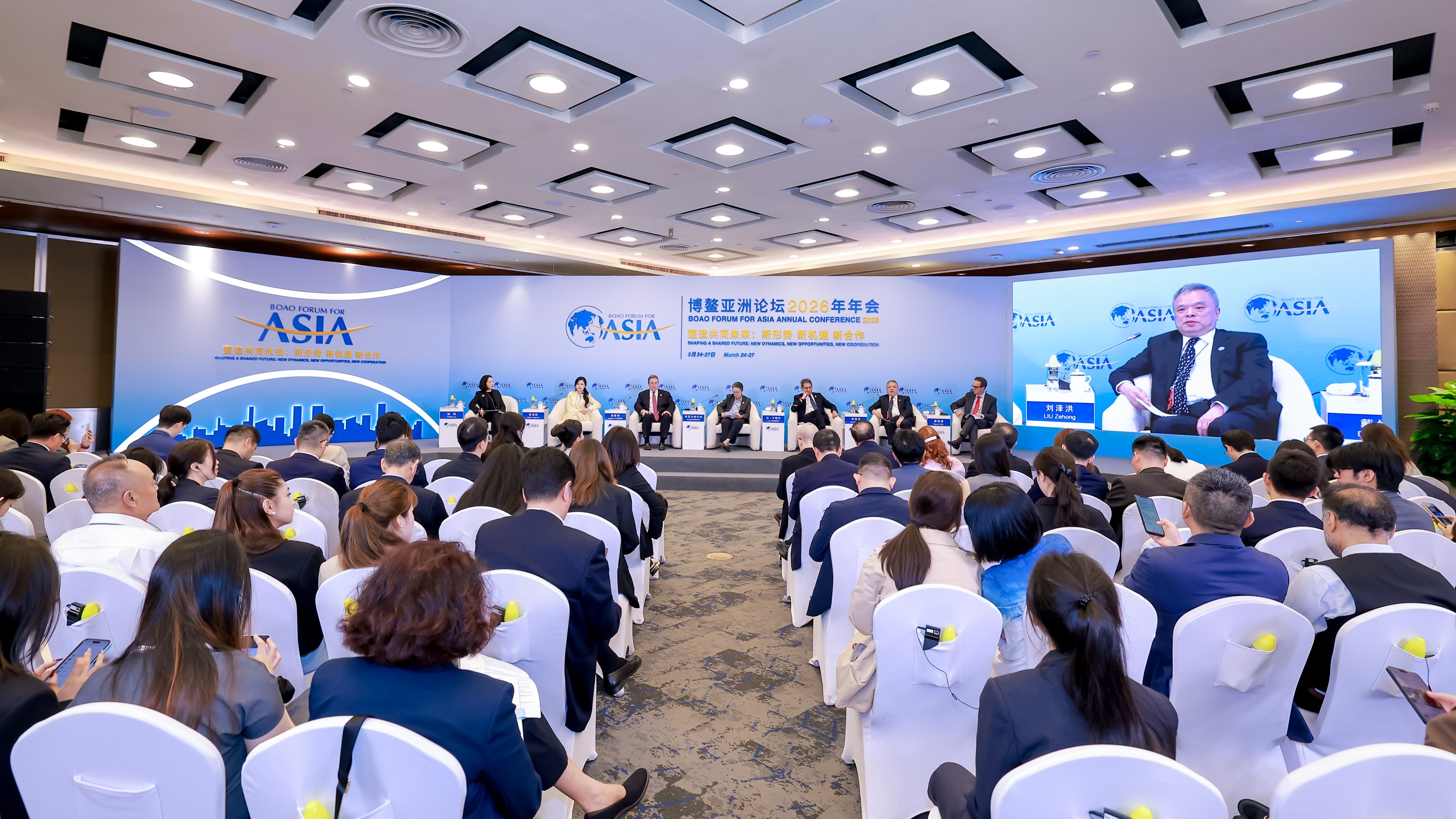
Liu Zehong, Executive Vice Chairman of the Global Energy Interconnection Development and Cooperation Organization (GEIDCO), attended the plenary session and spoke at a sub-forum on Asian new energy cooperation.
Liu noted that Asia is the world’s largest center of energy consumption and faces the dual challenge of sustaining development while reducing emissions. Strengthening regional cooperation is a key pathway to advancing Asia’s green energy transition. Priority areas include promoting grid interconnection and enhancing cooperation in technology, standards, and industry.
Drawing on development practices in China and Europe, Liu emphasized that grid interconnection plays a vital role in renewable energy development and regional growth. With abundant renewable energy resources across Asia, regional grid interconnection—leveraging differences in resource endowment, time zones, and electricity prices—can enable multi-energy, wide-area complementarity. This approach helps smooth fluctuations in renewable energy output, improve integration, reduce overall energy costs, and enhance the quality and efficiency of the energy transition.
Liu stressed that Asia’s energy transition should place equal emphasis on clean power generation and the electrification of energy consumption. While renewable energy has expanded rapidly, electrification has progressed more slowly. Accelerating new forms of electrification is therefore essential for deeper decarbonization.
He explained that new electrification is adapted to a high share of renewable energy and is characterized by being green, low-carbon, smart, and flexible. “Green and low-carbon” refers to replacing direct fossil fuel use on the demand side with clean electricity, as well as hydrogen produced through electrolysis and synthetic fuels, thereby steadily increasing overall electrification levels. “Smart and flexible” means that emerging electricity loads can act as flexible resources, interact with the grid, and actively participate in system regulation—supporting the large-scale development and integration of renewable energy.
During the conference, GEIDCO and BFA jointly released the flagship report Boao Forum for Asia Annual Report 2026: Sustainable Development—Asia and the World. GEIDCO Vice President Li Baosen attended the launch event and provided an in-depth interpretation of sections related to Asia’s green and low-carbon energy transition.
He noted that the global energy landscape is rapidly evolving toward cleaner, lower-carbon, and more diversified development, with Asia shifting from the “largest consumer of traditional energy” to a “leader in clean energy development.” China’s installed clean energy capacity accounts for approximately 45% of the global total. Installed wind and solar capacity increased from 530 GW in 2020 to 1840 GW in 2025—an increase of over 1300 GW—making significant contributions to energy transition in both Asia and globally.
To accelerate the transition, efforts should be guided by the principles of “clean energy dominance, electricity-centered development, interconnection, and smart efficiency,” and focus on building a future energy system that supports sustainable development. Five priority actions were proposed: large-scale development of clean energy; construction of robust, digitalized, and intelligent power grids; accelerated electrification; clean and efficient use of fossil energy; and coordinated innovation across the energy sector and related industries. In addition, a four-pillar support framework should be advanced, comprising policy coordination, market-driven mechanisms, financial empowerment, and enhanced international cooperation.
20260327-2
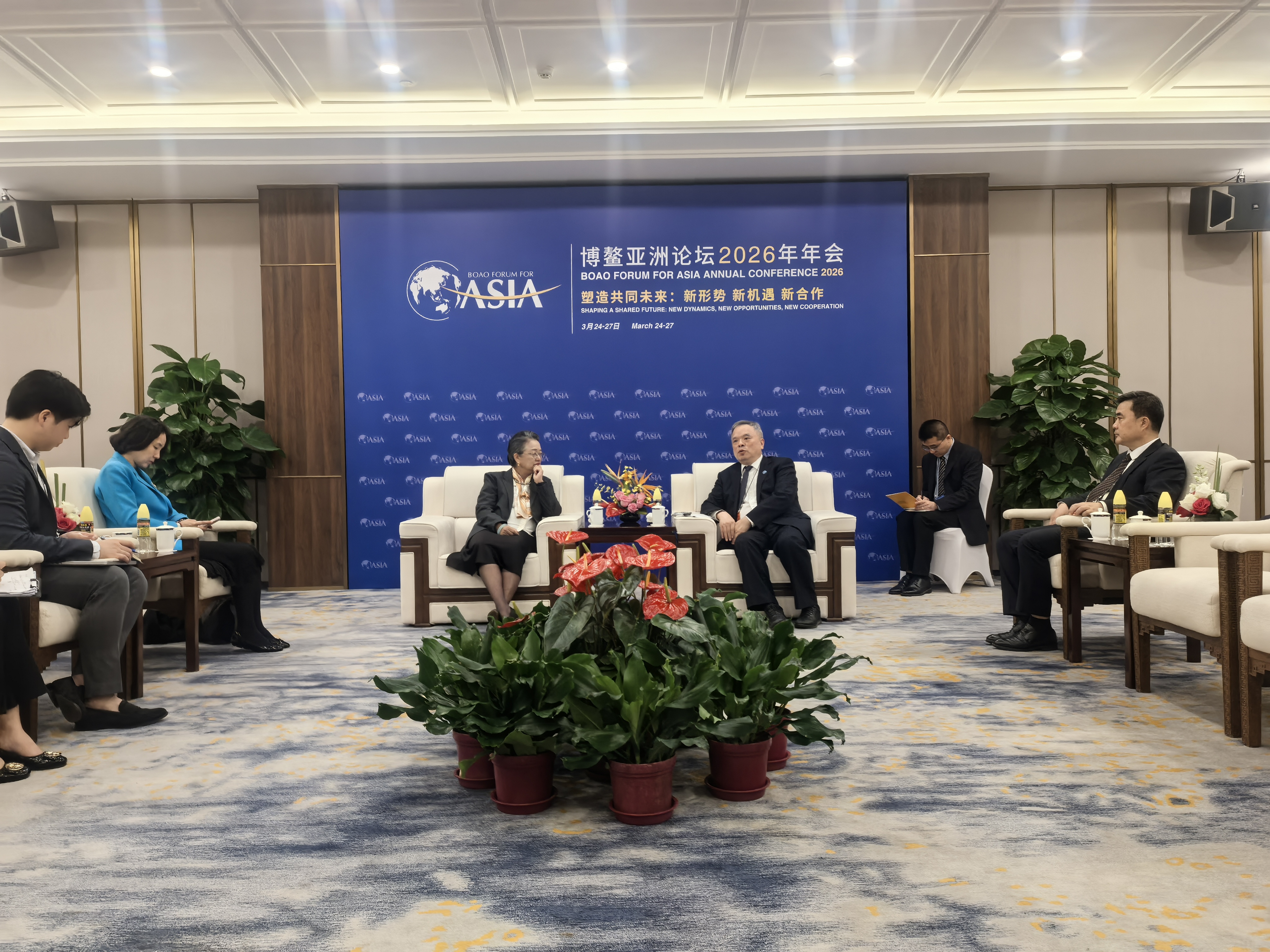
On the sidelines of the conference, Liu and his delegation met with Francesco La Camera, Director-General of the International Renewable Energy Agency, and Armida Salsiah Alisjahbana, Executive Secretary of the United Nations Economic and Social Commission for Asia and the Pacific, among other guests. They held in-depth discussions and reached broad consensus on renewable energy development and integration, grid interconnection, and new forms of electrification. All parties expressed their willingness to leverage their respective strengths and further strengthen cooperation in areas such as joint research, capacity building, and event organization.
The BFA Annual Conference 2026 was held under the theme “Shaping a Shared Future: New Dynamics, New Opportunities, New Cooperation.” The conference focused on four key areas: understanding global trends and guiding development; deepening regional cooperation and unlocking vitality; promoting transformation and innovation to unleash development potential; and strengthening partnerships for inclusive development. More than 50 sub-forums, roundtables, and dialogue sessions were held during the event.