On 9–10 April local time, the International Vienna Energy and Climate Forum (IVECF 2026) was held at the Hofburg Palace in Vienna, Austria. Under the theme of “Powering Prosperity, Security and Stability,” the Forum brought together political leaders, representatives of United Nations agencies, energy experts, and pioneers of green industry from around the world. Discussions focused on advancing energy transition and climate action in a coordinated manner, building multilateral consensus on global economic recovery, stable energy supply chains, and long-term sustainable development, while providing a high-level platform for dialogue and practical cooperation.
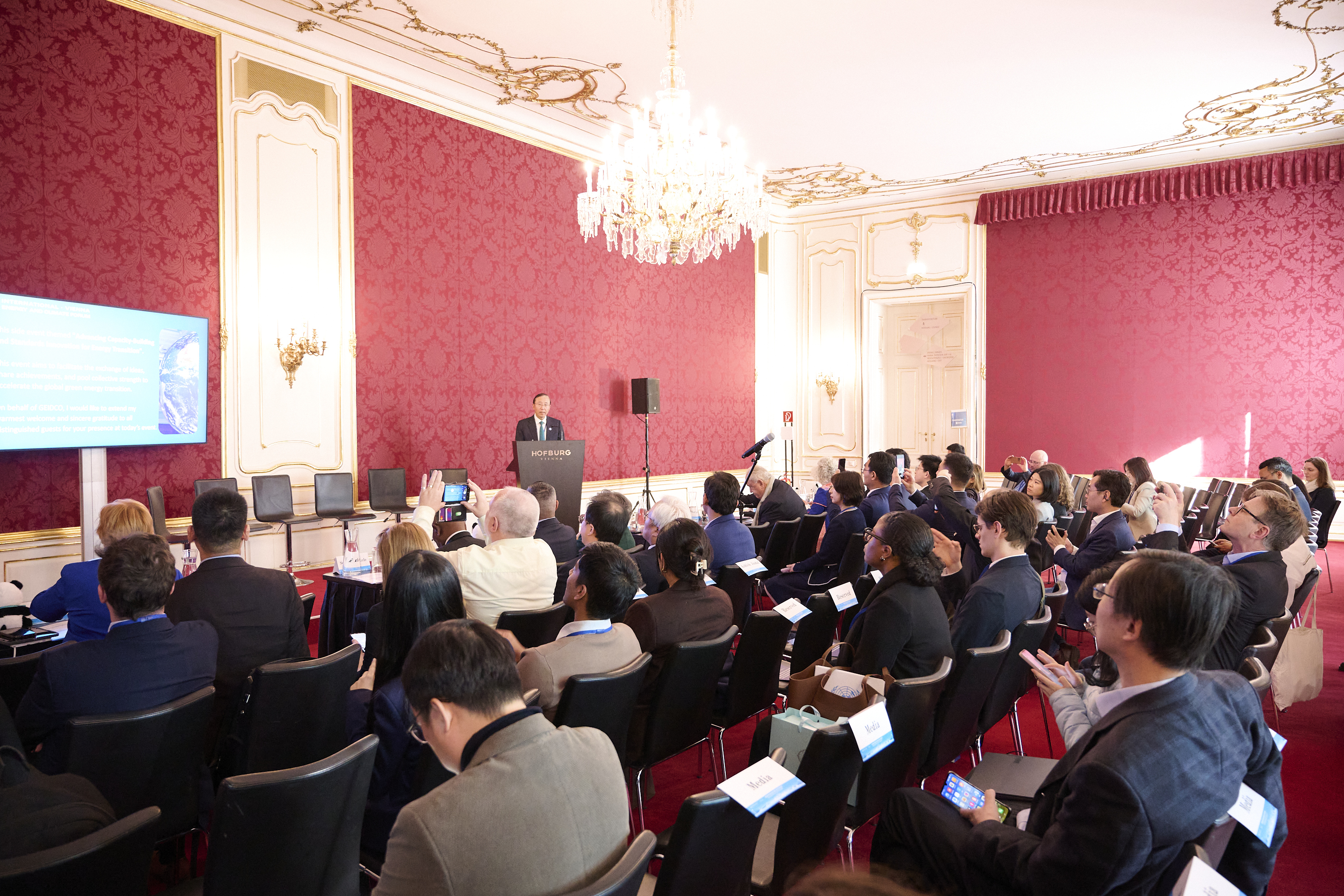
On 9 April, the Global Energy Interconnection Development and Cooperation Organization(GEIDCO) held a thematic side event on “Capacity Building and Standards Innovation for Energy Transition.” The event highlighted the advantages of the Global Energy Interconnection platform in delivering solutions for advancing the global energy transition and addressing climate change.
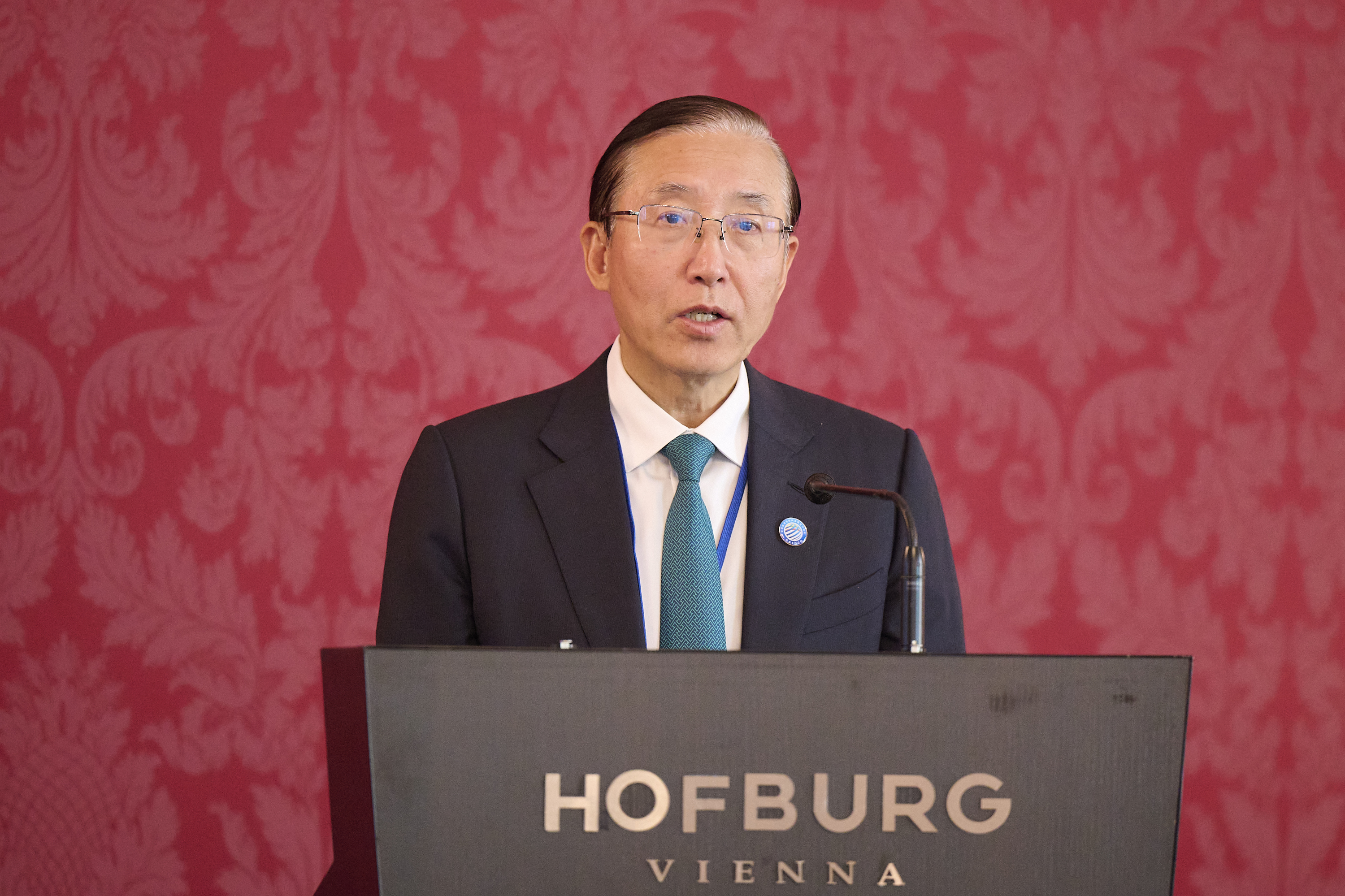
The side event was co-organized by GEIDCO together with the UNFCCC Secretariat, the United Nations University, the Paris Committee on Capacity-Building (PCCB), the UN Sustainable Development Solutions Network (SDSN), the Council of Engineers for the Energy Transition (CEET), and REN21. Xin Baoan, Chairman of GEIDCO and President of the China Electricity Council (CEC), H.E. Ms. Rabab Fatima, United Nations Under-Secretary-General and High Representative for the Least Developed Countries, Landlocked Developing Countries and Small Island Developing States (UNOHRLLS), Jeffrey Sachs, President of the SDSN, Zou Ciyong, Deputy Director General of the UNIDO, and Riad Meddeb, Director of the UNDP Sustainable Energy Hub, attended the side event and delivered speeches.
Xin Baoan noted that the global climate crisis is intensifying. It has been ten years since the adoption of the Paris Agreement, and while the international community has made tremendous efforts, global carbon emissions have continued to rise. To address climate change and ensure energy security, we must accelerate the energy transition and build Global Energy Interconnection—one energy system that is clean energy-dominant, electricity-centered, interconnected, smart, and highly efficient.
Xin Baoan emphasized that clean energy will become the dominant source of energy production. By 2050, we aim to raise the share of clean energy in primary energy consumption to over 70%, making it the dominant energy source globally. Electricity will take the primary role in energy consumption. By 2050, the global electrification rate should be raised to over 60%, creating an electricity-dominated energy consumption pattern. Energy allocation should be achieved through grid interconnection. Grid construction and upgrading must be accelerated, and power grid interconnection advanced at the domestic, regional, and global levels, providing a robust platform for the large-scale optimized allocation of clean energy. The energy system must be made smart and efficient—artificial intelligence technology should be harnessed to empower energy and power development, comprehensively improving the efficiency of the energy system and reducing transition costs.
Xin Baoan stated that addressing climate change and accelerating the energy transition is a shared responsibility of all nations. Developing countries face widespread challenges related to technology, talent, and standards as they advance their energy transitions. GEIDCO will continue to strengthen technical exchanges and knowledge sharing, professional training, and international standards innovation to support and empower developing countries in their energy transitions.

Ms. Rabab Fatima remarked that the vision of a global energy interconnection aligns closely with the mandate of the UNOHRLLS in supporting the needs of the world's least developed countries. Clean energy is not only about reducing emissions, but also about ensuring energy access, affordability, security, and resilience. She noted that closing capacity gaps, building quality infrastructure, and increasing financing are priorities for these countries, and thanked GEIDCO for providing professional training to more than 10,000 participants from developing countries. She expressed her Office’s readiness to deepen cooperation with GEIDCO to promote a just and inclusive energy transition.
Jeffrey Sachs said that long-term planning and energy interconnection are essential for all countries. No country can solve energy challenges alone. Regional cooperation and interconnected power grids are vital, and Global Energy Interconnection represents the future direction of energy systems. He said SDSN would work with GEIDCO to build a sustainable and interconnected energy future for all.
Zou Ciyong said that capacity building and unified standards are two key pillars of the energy transition. He called for moving from commitments to action through greater investment in technology and stronger support for standards innovation to build resilient energy systems.
Riad Meddeb noted that many developing countries still face gaps in technical capacity and standardization. He praised GEIDCO’s leading role in advancing global energy standards innovation and said UNDP is committed to deepening cooperation with GEIDCO by combining GEIDCO’s technical expertise with UNDP’s global development network to ensure equitable sharing of technology, knowledge, and standards.
During the side event, interim findings of the Study on Global Energy Transition Capacity Building: Gaps and Needs Assessment, jointly conducted by GEIDCO, the UNFCCC Secretariat, and the PCCB, were released.
Seleshi Bekele, Former Minister of Water, Irrigation and Energy of Ethiopia and Chair of the GEIDCO Africa Regional Committee, Rana Adib, Executive Director of REN21, Franz Josef Radermacher, Honorary President of the German Federal Economic Senate and member of the Club of Rome, and Alejandro Kilpatrick, Head of Capacity Building Subdivision at the UNFCCC Secretariat, engaged in in-depth discussion on the challenges and cooperation opportunities in energy transition capacity building. On the topic of global energy interconnection standards, Gabriela Eilrich, Chief Representative for International Development of GEI Standards, exchanged views with experts from Sustainable Energy for All (SEforALL), China Electric Equipment Group, China Electric Power Research Institute, State Grid Shanghai Electric Power Research Institute, and State Grid Economics and Technology Research Institute. Participants agreed that capacity building and standards innovation are the core drivers of accelerating the global green energy transition and a key bridge for closing development gaps between regions worldwide. GEIDCO has played an important platform role in this process—through convening multilateral partnerships, fostering co-creation of knowledge, and advancing standards coordination—paving the way toward a more resilient and inclusive green energy future for the world.
At the side event, GEIDCO also launched the Joint Action Initiative on Capacity Building for the Global Energy Transition, together with the UNFCCC Secretariat, the PCCB, UNIDO, SDSN, UNU, and REN21.
The Initiative proposes six priority actions: strengthening global cooperation mechanisms for capacity building; jointly establishing a Global Energy Interconnection Academy; promoting knowledge sharing on energy transition; enhancing resource mobilization and sustainable financing; encouraging the participation of youth, women, and marginalized groups; and strengthening monitoring, evaluation, and continuous improvement.