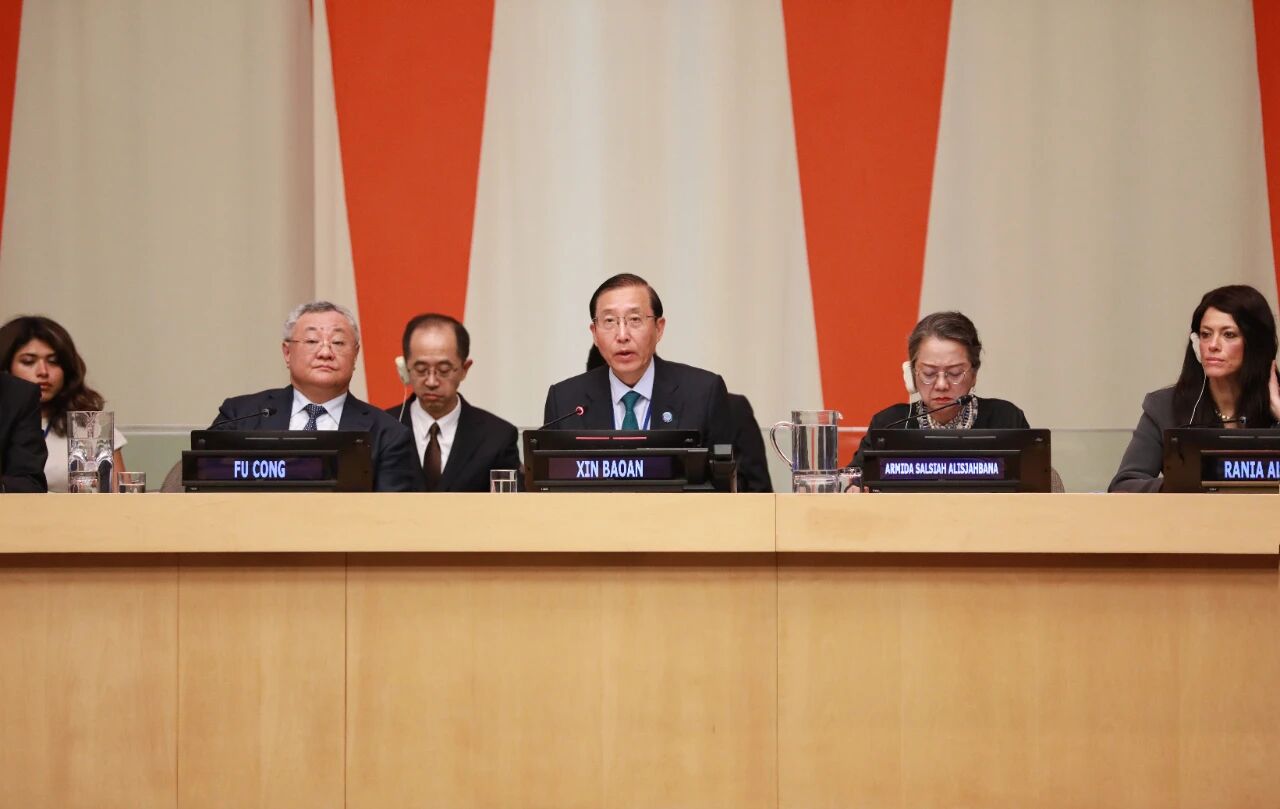
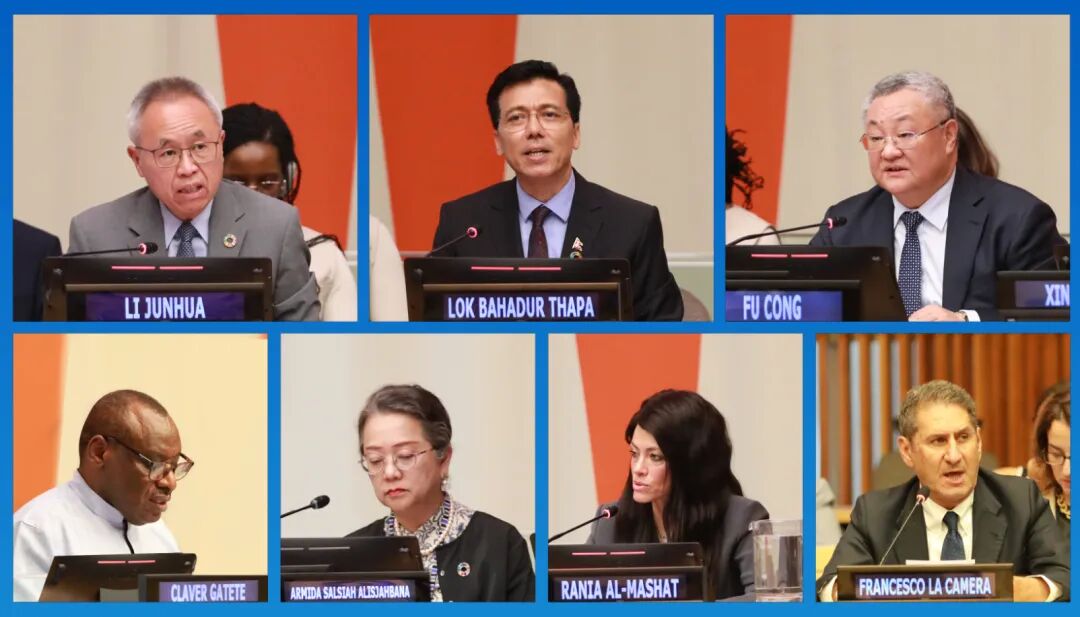
On July 10 local time, a thematic event on Global Energy Interconnection (GEI) was held at United Nations Headquarters in New York during the 2026 High-level Political Forum on Sustainable Development (HLPF). Under the theme of “Accelerating Energy System Innovation and Transition for Equity and Resilience to Advance Global Sustainable Development,” the event was co-organized by the Global Energy Interconnection Development and Cooperation Organization (GEIDCO), the Permanent Mission of China to the UN, the United Nations Development Programme (UNDP), the UN Economic and Social Commission for Asia and the Pacific (ESCAP), the UN Economic and Social Commission for Western Asia (ESCWA), Sustainable Energy for All (SEforALL), and the Sustainable Development Solutions Network (SDSN). Around 600 participants representing more than 300 enterprises and institutions from over 130 countries attended the event in person. H.E. Mr. Xin Baoan, Chairman of GEIDCO and President of China Electricity Council; H.E. Mr. Lok Bahadur Thapa, President of the United Nations Economic and Social Council; H.E. Mr. Li Junhua, Under-Secretary-General for Economic and Social Affairs, United Nations; H.E. Mr. Fu Cong, Ambassador Extraordinary and Plenipotentiary and Permanent Representative of the People’s Republic of China to the UN; H.E. Mr. Claver Gatete, Executive Secretary of the Economic Commission for Africa; H.E. Ms. Armida Salsiah Alisjahbana, Executive Secretary of the ESCAP; H.E. Ms. Rania AL-Mashat, Executive Secretary of the ESCWA; and H.E. Mr. Francesco La Camera, Director-General of the International Renewable Energy Agency, attended the event and delivered remarks.
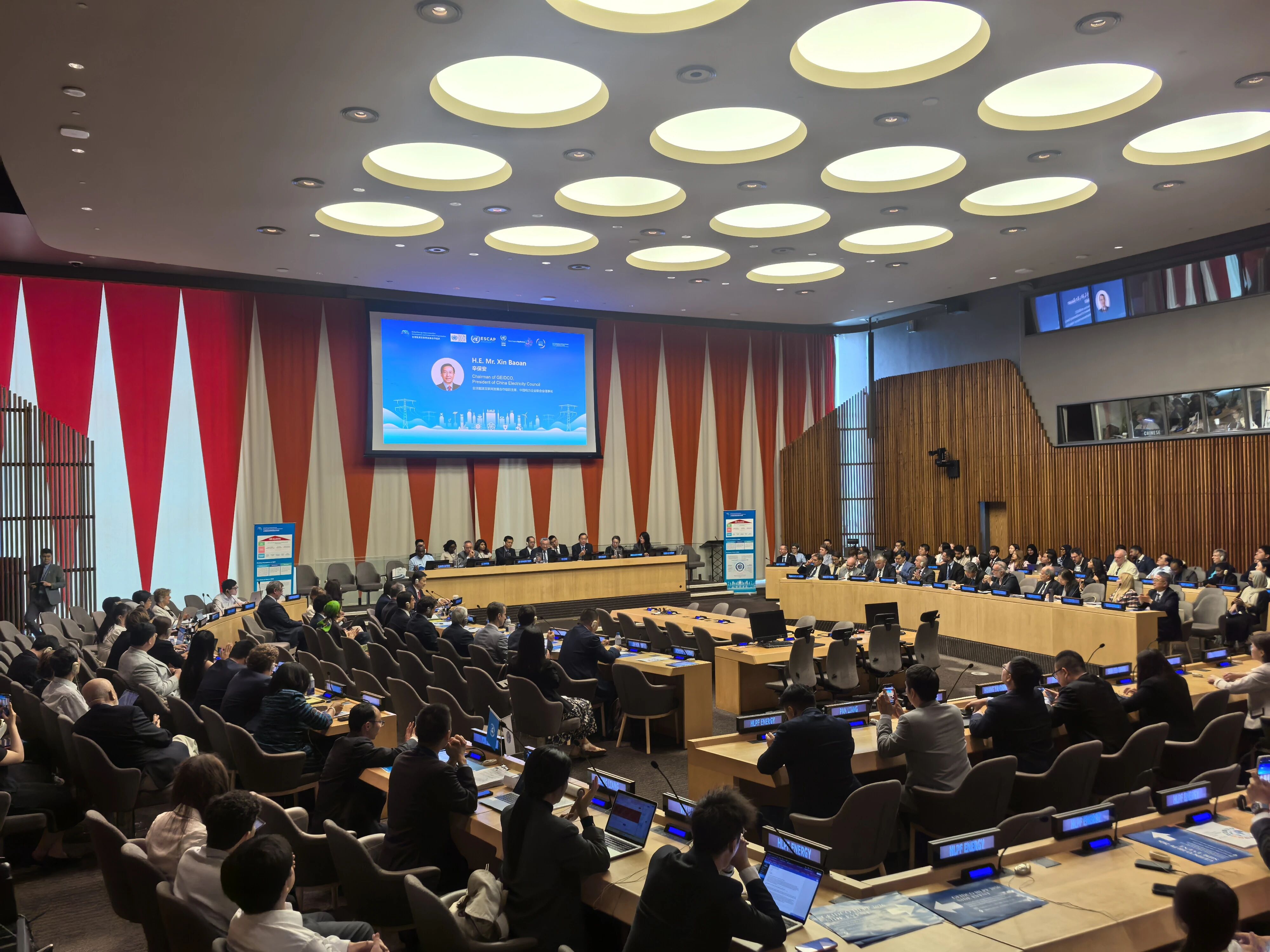
Mr. Xin Baoan stated that the green and low-carbon energy transition has become a global consensus. The key is to accelerate action, with the most effective approach being clean and electricity replacements, to build a modern energy system dominated by clean energy and centered on electricity, characterized by extensive grid interconnection, security and reliability, intelligence and efficiency. GEI offers a systematic solution for implementing the Global Development Initiative (GDI) and advancing energy transformation and transition. It is essential to drive systematic energy transition through innovation, promote fair transition through universal access, and pursue resilient transition based on security.
Mr. Lok Bahadur Thapa stated that affordable and clean energy, as set out in SDG 7, is a core pillar of the UN 2030 Agenda for Sustainable Development. At present, the global energy access gap remains significant, while the vulnerability of energy systems has become increasingly evident.He called for greater investment in green energy infrastructure in developing countries, inclusive access and technologies sharing, and a continued commitment to equity, with innovation driving a resilient and inclusive pathway for global energy transition.
Mr. Li Junhua remarked that energy is the foundation of sustainable development. Countries need to accelerate innovation in energy technologies and power grid interconnection, provide policy and technical assistance to developing countries, deepen multilateral cross-sectoral partnerships, and promote an equitable and inclusive energy transition.
Mr. Fu Cong stated that energy is the lifeblood of prosperity for all countries and a key issue at the heart of global governance. China put forward four practical measures to advance equitable and resilient transition: strengthening scientific and technological support and multilateral technical cooperation; advocating the removal of barriers to green technologies and promoting their large-scale industrial deployment; empowering all through inclusive access, fostering green lifestyles and modes of production, and encouraging broad participation in the transition; and improving global energy governance while jointly safeguarding energy supply security.
Mr. Claver Gatete stated that Africa is endowed with abundant clean energy resources yet remains mired in energy poverty, constraining the progress of industrialization. He expressed the hope that the GEI Academy would bring its programs to Africa and help address the continent’s shortage of local talents in the power and energy sectors.
Ms. Armida Salsiah Alisjahbana stated that the Asia-Pacific, a region densely populated and highly dependent on fossil fuel imports, faces significant imbalances between regional energy supply and demand. Drawing on China’s experience in renewable energy development, the region should advance cross-border power grid interconnection, establish green energy corridors across Asia, and enhance energy sufficiency and system resilience through regional cooperation.
Ms. Rania AL-Mashat stated that Western Asia faces multiple challenges, including geopolitical conflicts and freshwater shortages. The region needs to develop digital, robust and smart grids, promote distributed solar PV, and accelerate the establishment of an integrated pan-Arab electricity market. She expressed willingness to work with GEIDCO to advance regional power grid interconnection and turn related plans into action.
Mr. Francesco La Camera noted that renewable power generation has gained a decisive economic advantage over coal, and in this historic transition China has played a pivotal role. Given the severe electricity deficit in Africa, he called for increased investment in grid modernization and a continued improvement in the end-use electrification worldwide.
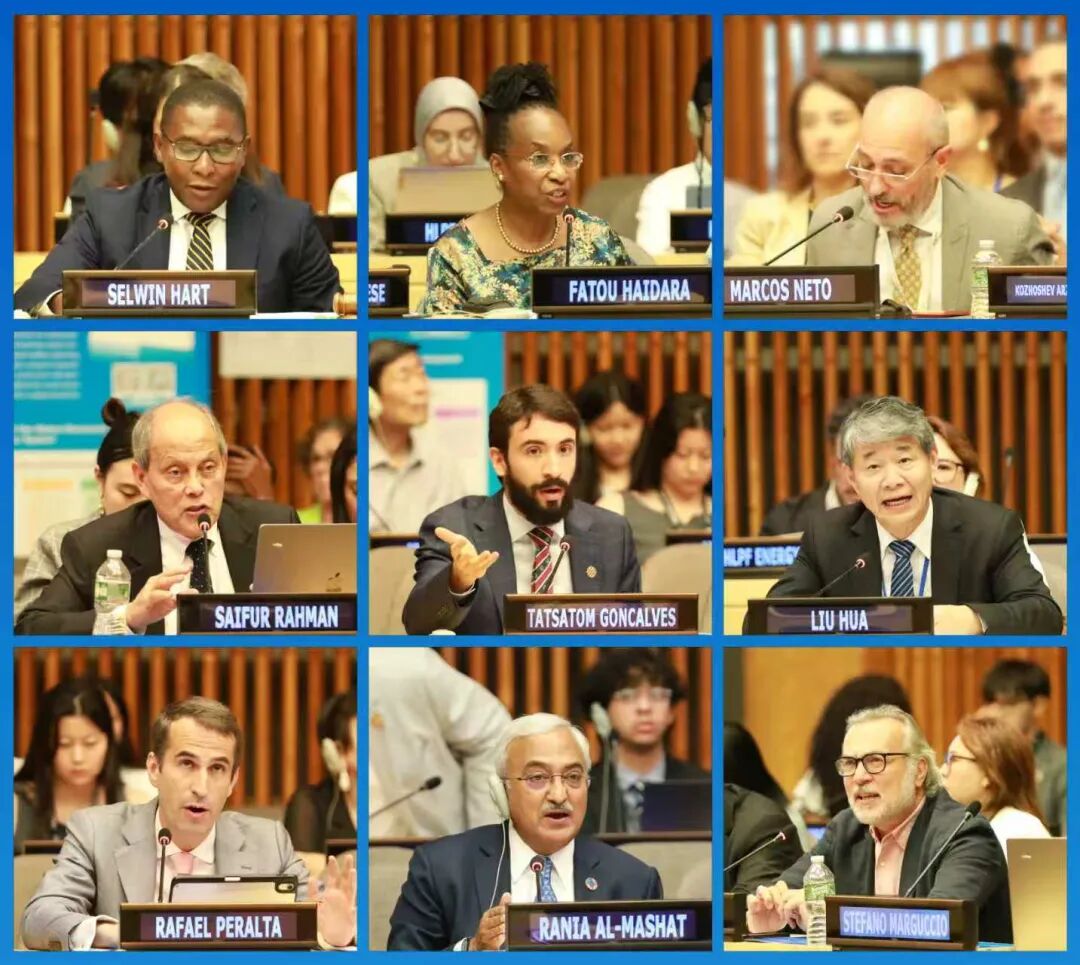
Focusing on the three core topics of “transformative innovation and enhanced resilience in energy systems,” “just transition and global governance,” and “synergies with other sustainable development goals,” the event featured keynote speeches by H.E. Mr. Selwin Hart, Special Adviser to the Secretary-General on Climate Action and Assistant Secretary-General for the Climate Action Team; H.E. Ms. Fatou Haidara, Deputy to the Director General and Managing Director of the Directorate of Global Partnerships and External Relations, UNIDO; H.E. Mr. Marcos Neto, Assistant Secretary-General and Director of the Bureau for Policy and Programme Support, UNDP; H.E. Mr. Kozhoshev Arzybek Orozbekovich, Member of the Board (Minister) for Energy and Infrastructure of the Eurasian Economic Union; H.E. Mr. Sérgio França Danese, Permanent Representative of Brazil to the UN; H.E. Mr. Ernesto Soberón Guzmán, Permanent Representative of Cuba to the UN; and H.E. Mr. Vepa Hajiyev, Permanent Representative of Turkmenistan to the UN.
Experts and representatives from the International Atomic Energy Agency, the International Electrotechnical Commission, Sustainable Energy for All, the United Nations Environment Programme, the World Resources Institute, and GEIDCO participated in panel discussion. The speakers noted that energy is not only central to the green and low-carbon energy transition, but also a fundamental prerequisite for job creation, poverty reduction, industrialization, and digital development. At present, large numbers of people worldwide still lack access to reliable electricity. Advancing energy infrastructure development, technology transfer, and regional interconnection therefore remains an important task in advancing the Sustainable Development Goals(SDGs).
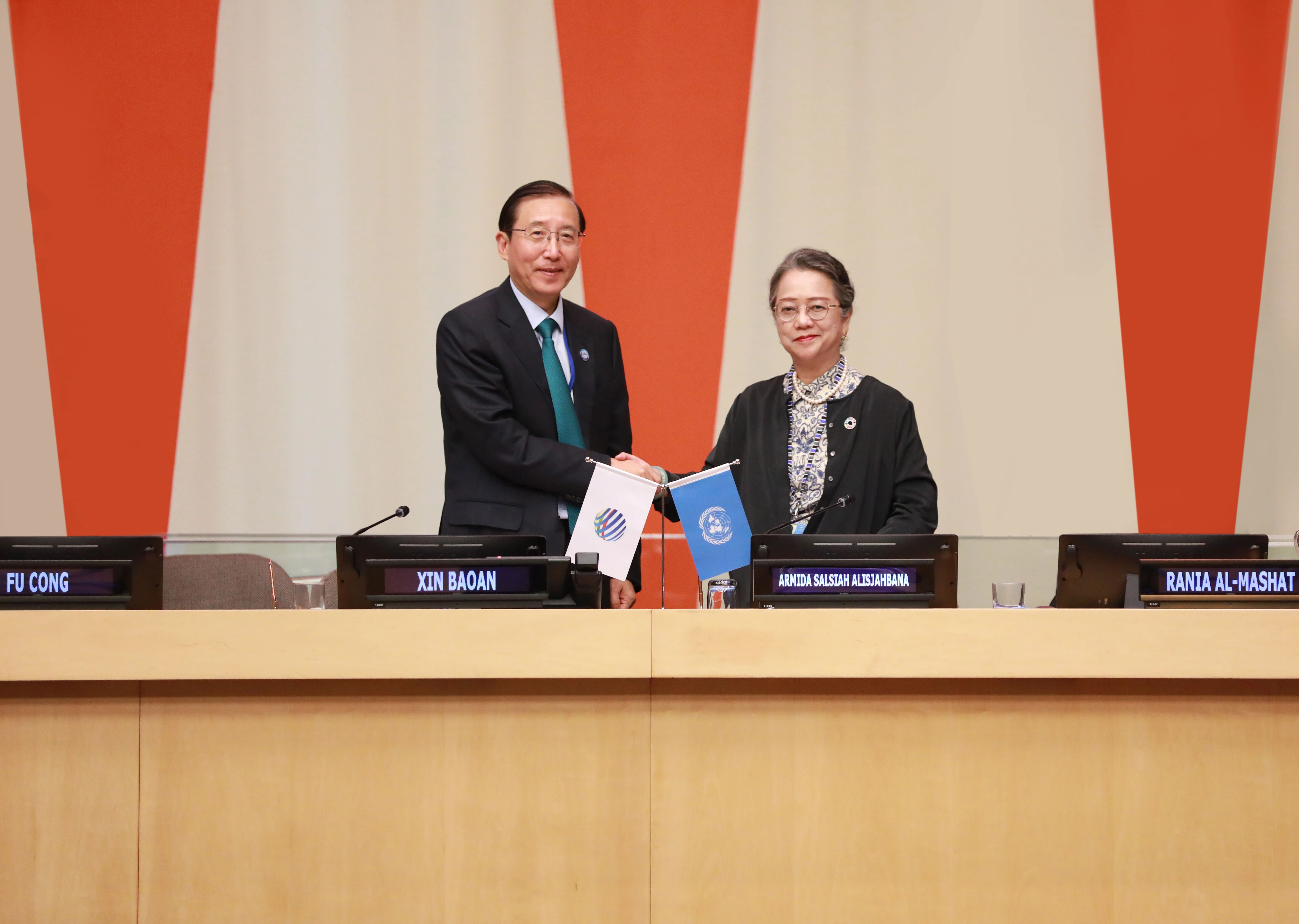
The event was co-moderated by Dr. Cheng Zhiqiang, Executive Secretary for Cooperation of GEIDCO, and Mr. Riad Meddeb, Head of UNDP's Decarbonization and Sustainable Energy Team, and was livestreamed on the UN website. It also featured the global launch of the Global Electricity Development Index 2026, the signing of a cooperation agreement between GEIDCO and ESCAP, and the inauguration of the GEI Academy.
The Global Electricity Development Index is the world’s first comprehensive index to systematically evaluate electricity development performance at both regional and national levels. First launched globally by GEIDCO in 2024, the Index captures the latest landscape and trends of global electricity development and provides a reference for countries to explore electricity development pathways suited to their national circumstances.
The Global Electricity Development Index 2026 provides a comprehensive assessment of electricity development performance in 100 countries across four dimensions: supply security, electricity consumption and services, green and low-carbon development, and technological innovation. According to the report, the top five countries in terms of overall electricity development performance are Finland, Sweden, Switzerland, China, and Norway. China ranks first globally in electricity technological innovation, has the world’s largest installed clean energy capacity, and leads the world in the application of digital and intelligent technologies in the power sector.